
Educator sees growing interest in women’s mental health training
Over the past decade, Meitra Doty, M.D., has seen a shift in the public’s interest in women’s mental health, and that change is reflected in the trainees she teaches.
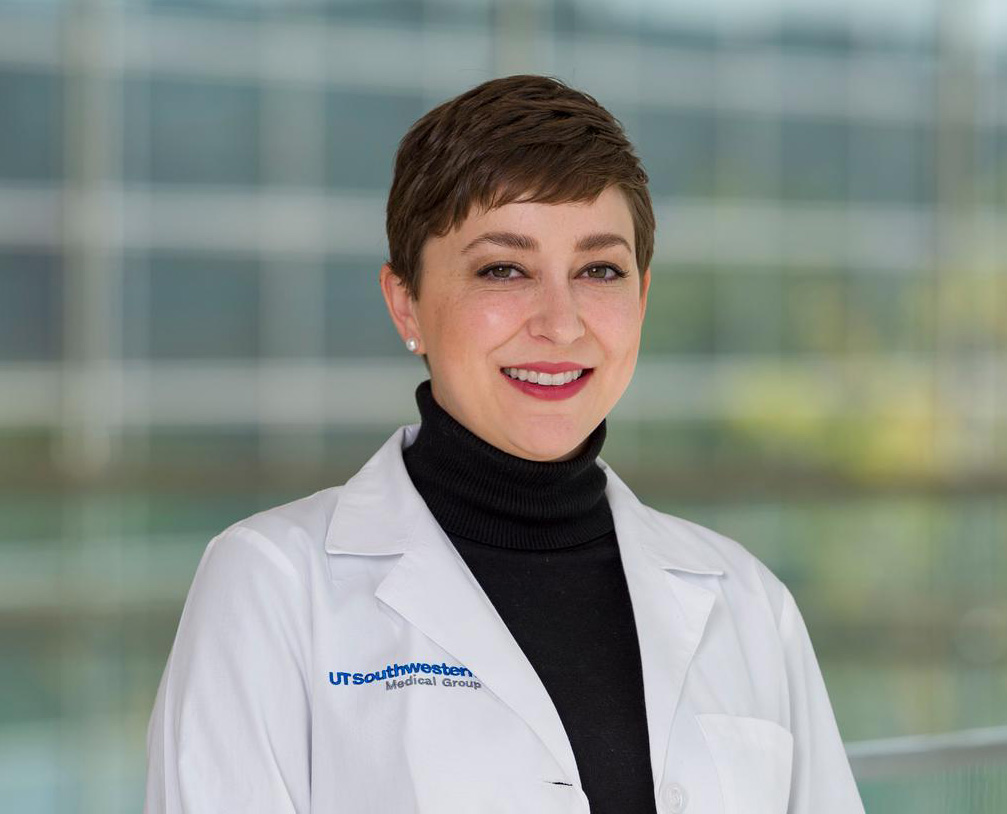
Meitra Doty, M.D.
“What I hear over and over is people saying, ‘I was in medical school and thought I was going to go into Ob/Gyn until I did my psychiatry elective and found out there's such a thing as reproductive psychiatry and was like, ‘Aha. That’s what I want to do,’” Dr. Doty said. “I see the momentum building. When I was in medical school, it wasn’t a very common topic.”
The choice to focus on women’s mental health and the related specialty of maternal health is becoming more popular as stories in the media bring the subject more into the public eye and students recognize related experiences in their own families, Dr. Doty said.
“The students are responding by saying, ‘Here’s an unmet need. Maybe I could do something about this,’” she said.
Dr. Doty can relate to their stories because she felt a similar impulse early in life. While the fight for equality between women and men has long been a force in her life, she first became interested in psychiatry when she saw the stigma that her father faced after a misdiagnosis of a psychological condition. People around him treated him differently, like he was to blame for his condition and should be kept away from others. She noted the difference in people’s reactions – and her own – when he was correctly diagnosed with cancer and autoimmune encephalitis, which was causing hallucinations and memory issues.
As someone who wanted to advocate for vulnerable populations – “people who needed a voice the most,” is how she describes it – the decision to go into women’s mental health was a good fit.
“It just made sense for me to be a psychiatrist who was fighting for women and kids,” Dr. Doty said. “I had envisioned myself becoming a child psychiatrist and specializing in trauma and victims of domestic violence or child abuse. And I think I was just drawn toward a vulnerable population that gets either overlooked or are stigmatized quite a bit.
“I really just had a soft spot for that specific group of people struggling and not being able to get the help that they need because of the fearfulness and the stigma.”
That drive to help others fueled her medical school education at the University of Oklahoma College of Medicine and her residency in psychiatry at UT Southwestern Medical Center, where she completed her training in 2013. Now an Associate Professor of Psychiatry with UT Southwestern and a physician at Parkland Memorial Hospital specializing in women’s mental health, she sees women across their reproductive lifespan. Although most of her patients are pregnant or postpartum, she also sees women with young children who may be dealing with other specialized needs. She sees her practice as focusing on “maternal mental health.”
Part of Dr. Doty’s week is spent in the high-risk obstetrics clinic at Parkland, performing consultations and teaching obstetrics residents what to look for in their patients to ensure their mental health needs are being met.
“I think it’s unique to the OB trainees, because they don’t really have other programs with that kind of immediate access to a psychiatrist to help them learn how to manage these cases,” Dr. Doty said.
Parkland’s Behavioral Health Clinic includes a Women’s Mental Health Clinic, where Dr. Doty, Latoya Frolov, M.D., and current fellows and residents training in women’s mental health treat patients with more severe mental illness.
Dr. Doty also spends one day a week at Parkland’s Victim Intervention Program, which offers counseling services to victims of violence and abuse. Another portion of her week is spent working with the Perinatal Psychiatry Access Network (PeriPAN), a service funded by the Texas Child Mental Health Care Consortium (TCMHCC) that offers providers resources and consultation for cases involving pregnant and postpartum women with mental health needs. Dr. Doty was the director of the service for its first year before transitioning to oversee UT Southwestern’s Women’s Mental Health Fellowship, which is partially funded by TCMHCC.
One of less than 20 in the United States and one of just two in Texas, the fellowship provides one year of extended training in women’s mental health, including perinatal care and the areas of eating disorders and trauma treatment, both of which affect women disproportionately. Fellows train at Parkland and UT Southwestern.
Dr. Doty was also one of the driving forces behind UT Southwestern’s Women’s Mental Health Concentration for doctors in the third and fourth years of their psychiatry residency – a precursor to a potential fellowship. That program includes rotations at UT Southwestern, Parkland, and the Dallas Veterans Affairs Medical Center, where residents learn to diagnose and treat a variety of psychiatric conditions, including eating disorders, stressor-related conditions, and complex personality disorders.
Dr. Doty believes that UT Southwestern and its partner institutions are well-positioned to offer training in women’s health because of the breadth of services they offer.
“I think we have a lot more clinical services than some other places,” she said. “I think that sets us apart in that way to have that kind of broader concept of what it means to treat women in psychiatry.”
That is not to say that there isn’t still work to be done in expanding the program’s reach. Dr. Doty would like to increase the university’s research focus on women’s mental health and expand the clinical services it and its partner institutions offer. While the university has a strong research program in eating disorders, headed by Carrie McAdams, M.D., Ph.D., Dr. Doty would like to see additional research into reproductive psychiatry. She said that she would love to recruit more researchers to build up that capacity.
She is also eager to see more men in psychiatry take an interest in reproductive mental health and women’s mental health in general.
“Right now, most of the trainees in reproductive psychiatry are women. Given that psychiatry as a field includes a fairly balanced mix of men and women, I’d love to see that same diversity reflected in training and courses on reproductive psychiatry,” Dr. Doty said. “This is an area that benefits from engagement by all psychiatrists, not just those who personally identify with the patient population. I want trainees to understand that this isn’t a niche or elective interest. It is a fundamental part of psychiatric care, and these are core concepts that every psychiatrist should be comfortable addressing.”