
Building Better Neurosurgical Care Through Quality Improvement

Across neuroscience, innovation is changing not only what physicians can treat, but how patients experience that treatment – bringing care to patients who previously couldn’t access it, extending treatment to those who once fell outside therapeutic windows, reducing the invasiveness of procedures, and creating possibilities for restoring function once thought lost.
But as the possibilities continue to expand, how do physicians ensure that innovation translates into better quality of care for every patient?
That question is at the center of UT Southwestern Medical Center’s comprehensive neurosurgery quality program, where physicians, nurses, therapists, pharmacists, and other members of the care team are examining the systems surrounding complex neurological care and finding ways to make them work better.
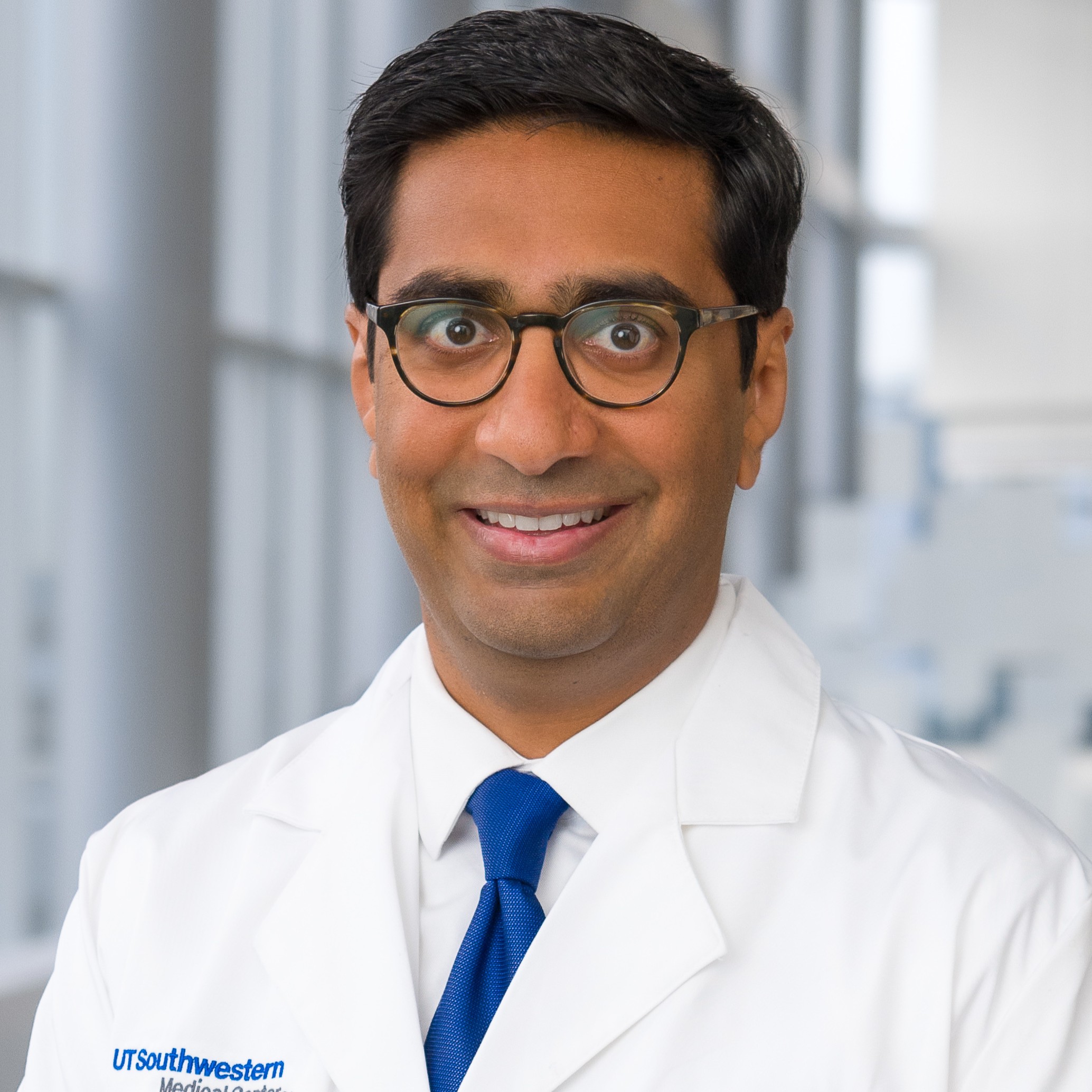
Ankur Patel, M.D.
For Ankur Patel, M.D., a neurosurgical oncologist and head of the Neurosurgery Quality Council and Committee, this expertise offers a way to bring an engineer’s mindset to medicine.
“Improving quality can mean developing a new therapy that helps patients live longer. But it can also be as simple and as meaningful as better communication between providers and patients that improves the care experience,” Dr. Patel said.
Seeing Care the Way the Patient Does
Hospitals are organized into departments. Patients are not. A patient undergoing neurosurgery may move between clinic, surgery, intensive care, nursing, pharmacy, rehabilitation, and outpatient follow-up. Each team has its own responsibilities, but from the patient’s perspective, it is all one experience.
That realization helped shape UT Southwestern’s quality improvement program. The Department of Neurological Surgery saw opportunities to strengthen communication between inpatient and outpatient teams and create a stronger flow of information among physicians, nurses, therapists, pharmacists, and other providers.
“The patient experiences the whole process,” Dr. Patel said. “When things don’t go smoothly, for them it feels like a disruption.”
Bringing those groups together allows the team to identify where delays or breakdowns are occurring and solve problems across departments rather than within individual silos.
Efficiency as a Clinical Outcome
One of the program’s first priorities was examining hospital length of stay. At first glance, reducing length of stay can sound primarily operational. But for Dr. Patel, efficiency and quality are closely connected.
When therapy happens sooner, discharge planning begins earlier, patients receive the next step in care without unnecessary delay, and they can recover and return home more quickly.
“A lumbar drain trial, for example, requires coordination across neurosurgery, interventional radiology, and therapy,” said Dr. Patel. “By bringing those teams together and completing evaluations earlier, we can move care forward and, when appropriate, get patients home sooner.”
Nursing feedback has similarly helped identify tasks that can be completed the day before discharge.
A Standard Approach to Personalized Care
Clinical pathways are another important component of the program.
For patients with pituitary tumors, UT Southwestern has developed a standardized pathway so physicians, ICU teams, and floor nurses understand the expected progression of care. That common starting point makes deviations possible and gives the team an opportunity to determine whether a change is clinically necessary or whether a preventable issue is developing.
But standardization does not mean every patient receives identical care.
“Standardization is where you start,” said Dr. Patel. “But if we know a patient has previously responded poorly to a particular pain medication, we can begin with a different regimen.”
Similarly, a patient undergoing surgery for a glioma in a location associated with greater stroke risk may appropriately remain hospitalized longer than another patient undergoing a similar operation. In every case, the pathway provides the baseline. The patient’s biology and clinical course determine where the team goes from there.
Multidisciplinary by Design
That philosophy is supported by UT Southwestern’s multidisciplinary structure. The impact is especially clear in brain tumor patients, who may require neurosurgery, neuro-oncology, radiation oncology, otolaryngology, and other specialties. Functional neurosurgery patients also require close collaboration between neurosurgeons and neurologists. At UT Southwestern, all specialists are part of the same health system, often sharing clinical space, electronic records, tumor boards, and regular conferences.
“I see radiation oncologists every single day and our neuro-oncologists who are just down the hall,” Dr. Patel said. “That makes multidisciplinary care more than a referral network and ensures that communication is embedded into the way patients are treated by our teams.”
Measuring Innovation
Quality improvement will become increasingly important as new technologies emerge, from focused ultrasound and immunotherapy for brain tumors to brain-computer interfaces, robotics, and increasingly minimally invasive procedures.
But an innovation is only meaningful if it improves real-world care.
“You can look at it from a pure science standpoint and say this seems like a promising treatment,” Dr. Patel said. “But the quality outcomes and quality metrics are what you can rely on to say, yes, this actually made a clinical impact.”
Deep brain stimulation offers one example. As imaging and neuro-navigation have improved the precision and efficiency of electrode placement, selected patients can now undergo procedures that once required several days of hospitalization and potentially return home the same day.
Improved technology can create safer care, reduce resource use, and ultimately expand access.
A More Connected System
For referring physicians, Dr. Patel believes the quality program sends an important message about how UT Southwestern approaches their patients.
“We’re continually trying to get better, and that includes partnering with community physicians rather than replacing them,” he said. “We encourage patients referred for complex neurosurgical treatment to continue relationships with the physicians who have cared for them outside UT Southwestern.”
In a field driven by technological innovation, better care does not depend only on what happens in the operating room. It depends on how well the entire system works around it.